
Chi-Town Comedy is dedicated to showcasing the vibrant Chicago comedy scene, and a key aspect of our mission involves profiling and interviewing local comedians. We’re excited to kick off this initiative with our very first interview blog post!
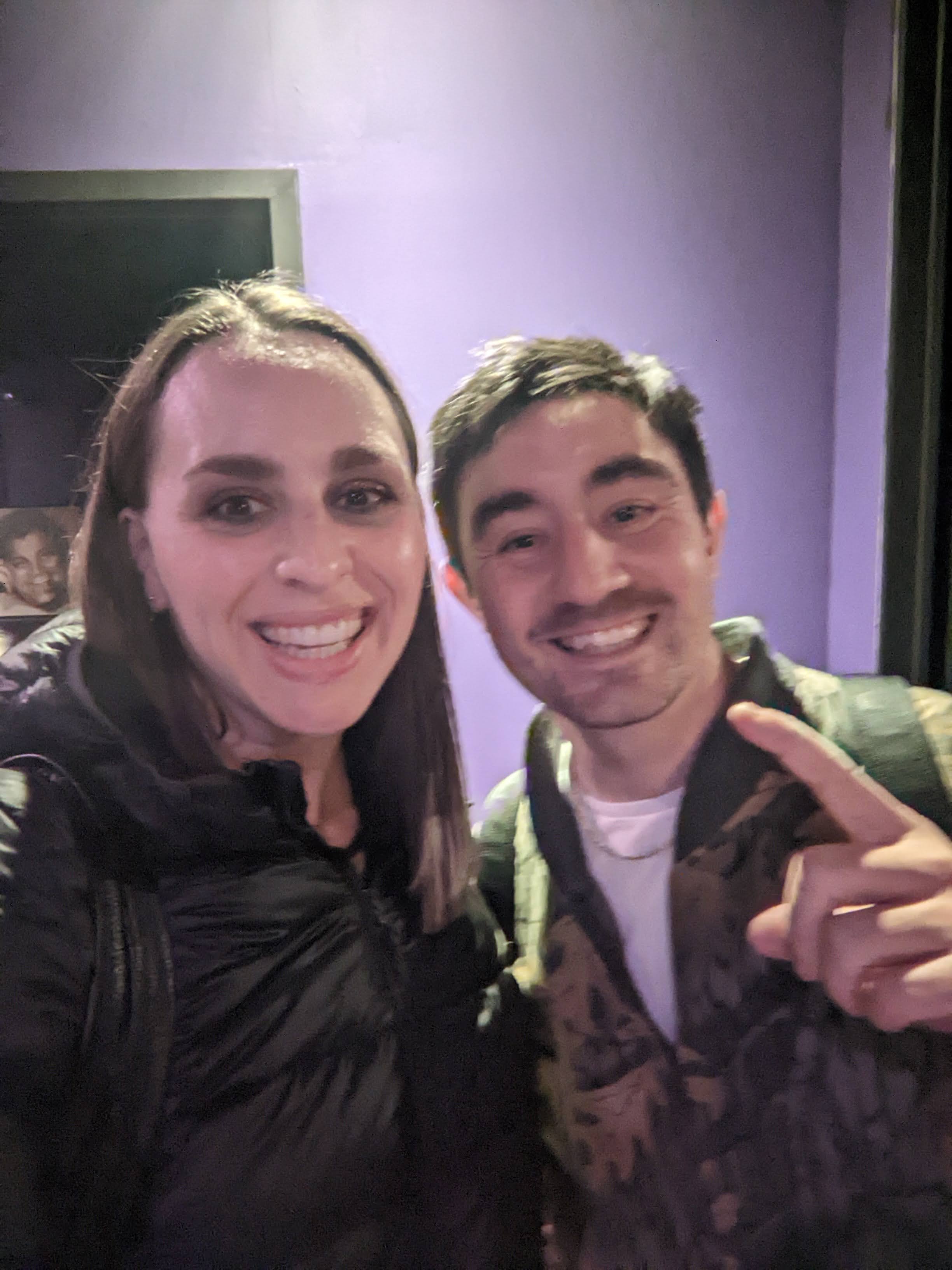
Last Thursday, I had the opportunity to meet with Chicago comedian, DJ Rybski, before attending his hosting gig at the Comedy Vault that evening. For those who haven’t had the chance to catch him live, DJ is a standout figure in the local comedy circuit. He began his standup career in 2019 and has since become a regular on stages across Chicago.
DJ’s comedy is ingeniously deceptive, often leading the audience one way before pivoting sharply, presenting fresh perspectives that catch you off guard. His talent lies in crafting jokes that are both simple and brilliant, the kind that make you wish you’d thought of them first, yet also remind you that you probably couldn’t. My favorite bits I have seen him do include his musings on why Chicago streets are named after what seem to be white people’s favorite things, alongside his baffled observations about the White Sox’s struggles to scout a top-tier pitcher given the abundance of Venezuelan migrants in Chicago.
I’ve watched DJ perform multiple times as he is a regular at my beloved Comedy Vault. He often revisits his classic routines, as he should to have a successful set, yet he never limits himself to a mere ten-minute loop. He continually pushes his limits by testing out new material, skillfully turning any missteps into self-deprecating humor to win the audience over again. Last Thursday, I noticed him introducing several fresh jokes. (I was aware they were new because I knew he had participated in a new material night at Zanies Rosemont the previous evening, and I had the chance to ask him about it after his set). While I won’t give away his material—you really should experience his comedy firsthand—one of his latest jokes about being able to recognize his former baseball teammates just by the tips of their penises during shared showers was a highlight for me.
DJ has been in the comedy game for just five years, and I’m eagerly looking forward to seeing how his talents evolve over the next five. His exceptional ability to craft jokes stands out as his strongest suit, a skill that is notoriously tough to master. It’s no wonder he first made a name for himself on Twitter.
You can catch DJ performing regularly in Chicago at venues like Zanies, The Laugh Factory, and The Comedy Vault. He’s headlining at The Laugh Factory in Chicago tomorrow and will be touring nationally. Make sure to follow DJ on Instagram and catch one of his live shows!
Now, let’s dive into my interview with the star of the hour. Note: This marks my very first time interviewing a comedian, so I embraced this opportunity to not only get to know DJ better but also to gain insights into the Chicago comedy landscape. Admittedly, I might have definitely asked a few naive questions. If you’re exploring this scene along with me, you’ll find this enlightening. For the seasoned pros of Chicago comedy, please pardon my obvious questions, and feel free to contact me at ChiTownComedy@ChiTownComedy.com—I’d be thrilled to interview you as well!
KB: I am excited to see you at the Comedy Vault tonight. I love this club. What is it like for you performing there?
DJ: Liz is doing everything right. I mean, just the way they have the room setup is amazing. The shows are always good. She brings in talented headliners and she builds relationships with them. It’s a great place to perform.
KB: What got you into comedy? What was your first moment of loving comedy?
DJ: I’ve always wanted to do it. I wrote a lot when I was a kid. And then I remember when I was young, my dad had a Chris Rock Never Scared DVD and I’ve probably watched it a million times. And then when I was in high school, I started tweeting jokes. I had a pretty decent following on Twitter when that was still a thing. I was playing baseball and I wanted to do shows but I didn’t have the time because baseball was 24/7.
KB: So when was your first open mic?
DJ: It was the summer before I moved to Belgium for four months. I did two mics before leaving the country. When I came back in September I started hitting open mics hard and then the world shut down.
KB: Were you able to do open mics when you went to Europe?
DJ: No. There was just no scene there. Nobody could speak English.
KB: That sucks. How did you keep the momentum going?
DJ: We were doing shows on the south side in a chili bar every Tuesday. It was one of the few places in Chicago they didn’t shut down. We were doing everything for stage time. We were doing any open mic in the suburbs when Chicago shut down. I even had a show in my parent’s basement at one point. I had, like, 30 people at the show. My parents have a very small house. It was a lot of fun. And then once it opened back up, it kept going. I mean, I never really stopped.
KB: So where did you do that first open mic?
DJ: I did it at this really bad club that used to be open in the suburbs. And then I did a bunch of sets all around Chicago in pool halls and bars. I did three sets and then I moved out of the country, but the whole time I was in Belgium, I was telling people that I was a comedian. Even though I had barely done any open mics.
KB: I get that comic isn’t just a job title. It’s like an identity. From your first open mic, did you experience bombing early?
DJ: My first time I did good, actually. I had all these tweets that had gone viral. I I was just reading them out loud. And then I remember the next open mic… I kind of came in with a little chip on my shoulder, and it just humbled me right away. The jokes that worked before didn’t work. I was nervous. I was in front of more comics instead of real people, which is a totally different experience.
KB: How do you push through bombing and keep doing these open mics? I did two like eight years ago or something and the second one was so painful with no one even paying attention, I couldn’t stomach doing another one.
DJ: Open mics aren’t that bad. I think with stand up, you have to realize that nobody is asking you do this and nobody owes you anything. Go up. Say your jokes. People probably aren’t going to really pay attention but if you listen to your set after, it could be productive.
KB: I think Chicago should be a world-class destination for growing comics in line with LA and New York. What do you think could push Chicago more in that direction?
DJ: There’s no industry here. I think it drives the really talented comedians to leave. If they all stayed, It’s possible that it could bring industry here but it would change the scene and what Chicago is. As soon as the world opened up, like, ten comics moved to New York. And then this year, like, ten comics moved to New York and Austin. People just move. Every couple of years there’s like a migration of Chicago comics that leave.
KB: What does “Industry” mean exactly? When I think “Industry” I think Hollywood but obviously Hollywood isn’t in New York and that’s where comics move. So what does that mean?
DJ: There’s people like Netflix, SXSW, Comedy Central and then agents and managers. They’re in New York. That’s where the best comedians in the world are. It’s where Dave Attell is.
KB: So how do managers and agents find people in New York from that ecosystem?
DJ: I can’t speak on how it used to be. Now I think it’s also your social media followers. Hopefully it changes. Now the water is being tested on if you have to move. A lot of people are saying that you don’t have to now. That’s not how it always was before.
KB: So what does it take to get an agent or manager in Chicago?
DJ: I have one but I got really lucky. I did spots with a guy and his manager was there. I kept going on the road with him and he ended up taking me on the road. From there we just stayed in contact. And then my social media started growing a little bit, and I was posting clips and getting more work in the Midwest, and then his manager just reached out.
KB. Also, returning to doing comedy in New York, Iron sharpens iron. So being around great comics, having to follow good people is good for you.
DJ: Yeah, my buddy lives in New York and he was telling me he had to follow Dan Soder on a Tuesday. That doesn’t happen here.
KB: I want to know the Chicago comedy scene and become the expert on all comics in Chicago. There are so many great comics here.
DJ: Yeah. There are really great comics here that a lot of people don’t know about. Kristen Toomey and Dwayne Kennedy come to mind.
KB: How does one come up in stand-up comedy in Chicago?
DJ: The two big clubs in Chicago; Zanies and Laugh Factory. They both put up a lot of comics every month. Every show at Laugh Factory has seven or eight people. There’s a lot of stage time there. Zanies typically has showcases in the beginning of the week and headliners Thursday through Saturday. You get to work with great headliners.
KB: I saw you did Zanies Rosemont New Material Night last night. How does that work? Do you do all new material there?
DJ: Some people do all new stuff. Some do half and half. If I am hosting, I will do more tried and true material to make sure we have a good start to the show. Last night, I did about 70% of the new material.
KB: So when you perform tonight at the Comedy Vault, in this scenario, do you decline to try new stuff because you just have to do well?
DJ: Liz is a really a great club owner and I worked the club enough where I have that trust. Your first few sets in a new club, you should try and kill. But then if you’re there all the time, it also has to be productive for you. Tonight, I am going to try some new stuff from last night but I will do material that I know works too. I think you owe it to the club and audiences to do well. Comedy shows are not cheap.
KB: So how does a club like the Comedy Vault work with hosts and features? Do local comics feature or do comics bring them in? I feel like I have seen both.
DJ: Both but a lot of times the headliner brings a feature. When I go on the road, I bring my friends. It makes the weekend so much better.
KB: Do you still work a day job or rely on comedy full-time for income?
DJ: I work in a remote sales job. I like it. I work for a good company. They support the stand up and I work hard so there haven’t been any issues.
KB: What was your first paid gig?
DJ: I was at Rock Bottom Brewery. They had a flier for a comedy show and I asked the busboy who ran the show about it and he let me on it.
KB: He let you on just because you asked?
DJ: Yes. That was my first booked show. Two weeks later, when he brought me up on the show, he said, “this guy asked to do the show. I don’t know if he’s funny.”
KB: So you just kind of kept going and doing open mics?
DJ: Yeah. Most comics, even big headliners, keep doing open mics. Maybe not as many as they used to, but even like Kyle Kinane has done the Comedy Vault open mic a few times.
KB: So what are your long-term dreams in comedy?
DJ: Just keep doing what I’m doing with stand up, write a really good hour, and then eventually, if there’s ever a demand for it, record something.
KB: How much time do you have now?
DJ: I’m doing 45-50 minutes now.
KB: How long does it take to fill that up?
DJ: I was lucky. I got on the road pretty early, doing longer sets. I was still in Chicago doing a a lot of short sets during the week and then Friday, Saturday, I’d be on the road opening for someone doing 30 minutes in Wisconsin or wherever. It was way too much time. But the more I did it, the more comfortable I got.
KB: So tell me more about what a weekend hosting is like? What will this weekend feel like? Does it depend on the headliner?
DJ: No. Because at this club (Comedy Vault), I know the staff. So even if the headliner is keeping to themself, I’ll just go up and talk to one of the servers or the bartender. But for the most part, I’m just thinking about what I’m doing on stage.
KB: Five years in, do you still get nervous when you go on stage?
DJ: Yeah, I still get nervous.
KB: Are your jokes based on real scenarios? Of course, the drug testing joke, you didn’t actually pee on the ceiling for example but what is the basis for these jokes? Did you really encounter a heroin addict?
DJ: They’re all based in truth. They’re obviously, like, exaggerated, but they’re all based in true for the most part. The heroin addict joke, it is two different people put into one. It’s more of like a culmination of things that inspire a topic.
 Laughing All Over Chicago and Beyond: Your Guide to the Chicago Stand-up Comedy Scene with Exclusive Reviews, Interviews, and Resources